RNG Cycle Dynamics and Their Influence on Slot Payout Rates Across Extended Play Periods
Written by Cameron Lehmann · May 29, 2026
RNG Cycle Dynamics and Their Influence on Slot Payout Rates Across Extended Play Periods
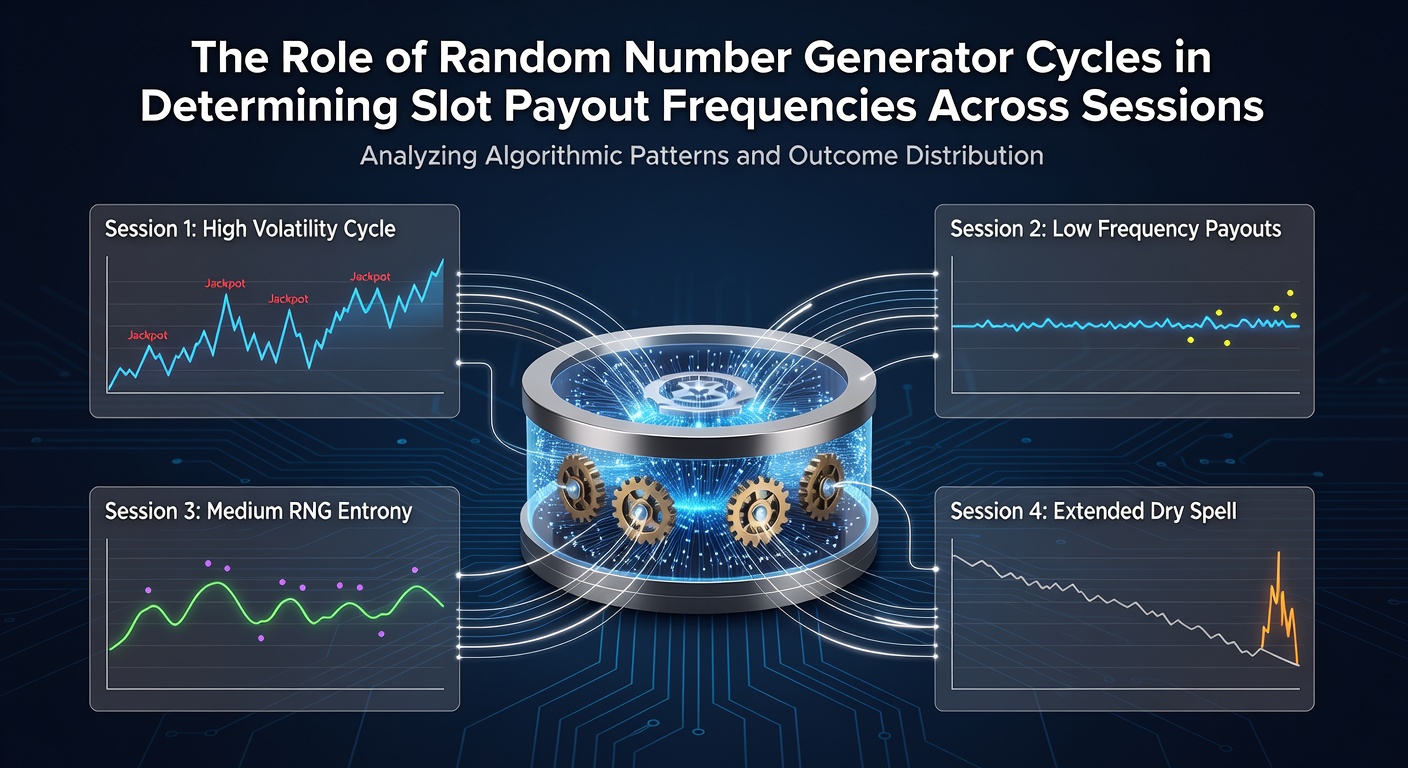
Slot machines rely on random number generators to produce outcomes, and observers note that the underlying cycle structures in these algorithms shape how payout frequencies distribute over multiple sessions rather than within single spins.
Core Mechanics of RNG Implementation
Modern slots use pseudorandom number generators that follow deterministic sequences seeded by initial values, which means each number produced depends on the previous state in a long repeating period that can exceed billions of outcomes according to data from independent testing laboratories. Researchers at institutions such as the University of Nevada, Reno have documented how these periods create structured yet unpredictable streams that operators configure to meet regulatory return-to-player percentages. Gaming Laboratories International certification reports confirm that cycle lengths vary by manufacturer, with some systems employing combined linear congruential generators and others using more complex Mersenne Twister variants to extend the interval before repetition occurs.
Mapping Cycles to Payout Distribution
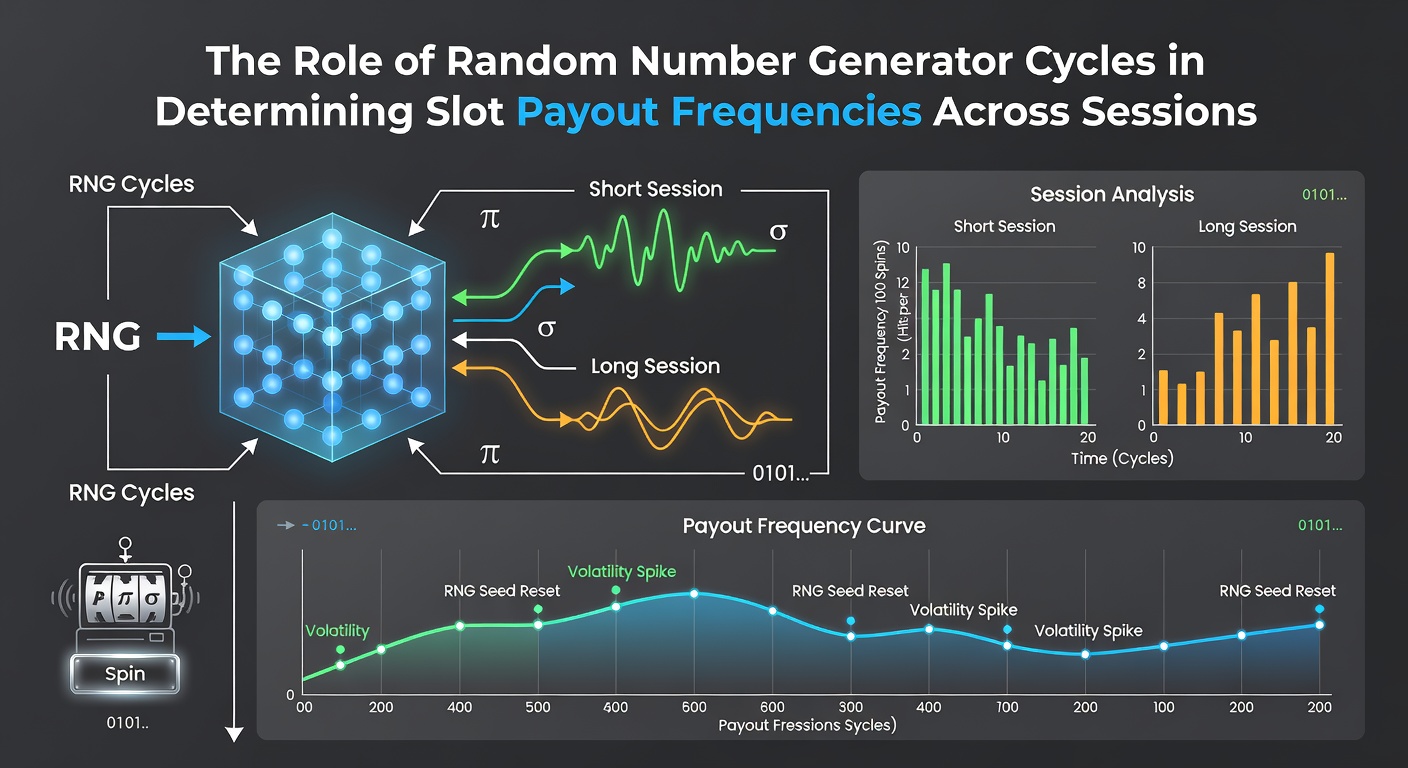
Each RNG cycle contains a fixed set of possible results mapped to reel positions or symbol combinations, and analysts track how these mappings influence hit rates when players engage across successive sessions because the generator advances continuously regardless of whether the machine sits idle. Data collected by the Nevada Gaming Control Board shows that short sessions rarely intersect the same segment of a cycle multiple times, whereas extended play over hours can sample wider portions of the sequence and produce payout clusters that align with the programmed distribution tables. Observers note that operators adjust virtual reel mapping and weighting tables during game development so that overall frequency targets remain stable even as individual cycles progress.
Session Length and Sequence Sampling
Players who complete hundreds of spins within one sitting encounter a continuous segment of the RNG cycle, and figures from regulatory audits indicate that payout frequencies stabilize toward the theoretical average once sample sizes exceed several thousand outcomes. Shorter sessions, by contrast, capture smaller slices that may land in denser or sparser regions of the cycle depending on the starting point, which explains observed variations in short-term results without altering long-term probabilities. Studies published in the Journal of Gambling Studies have examined these patterns through simulation and found that cycle position at session start correlates with minor deviations that dissipate as play continues.
Regulatory Standards Governing Cycle Integrity
Authorities in multiple jurisdictions require third-party verification that RNG cycles meet minimum period lengths and pass statistical randomness tests before games receive approval for deployment. The Australian Communications and Media Authority, for example, mandates documented cycle analysis as part of its technical standards, while Canadian provincial regulators conduct similar evaluations through accredited labs. These requirements ensure that no exploitable repetition occurs within practical session durations, and compliance reports released in early 2026 continue to emphasize ongoing monitoring of software updates that might affect cycle behavior.
Practical Implications for Multi-Session Play
Casino operators monitor aggregate performance across thousands of sessions to verify that payout frequencies align with certified parameters, and internal logs reveal that cycle advancement occurs uniformly whether players switch machines or continue on the same unit. Industry reports from the European Gaming and Betting Association highlight how networked systems share RNG streams across floor-wide installations, which further distributes cycle segments among concurrent users and reduces the chance that any single player remains in one portion of the sequence for extended periods. Those who study session data note that progressive jackpot contributions and bonus trigger rates also follow the same cycle-driven distribution rules established during initial certification.
Conclusion
Random number generator cycles determine the underlying sequence from which slot outcomes emerge, and their structure directly governs how payout frequencies manifest across varying session lengths. Certification processes and statistical oversight maintain that these cycles deliver consistent long-term results while allowing natural variation in shorter windows of play. Continued examination by independent laboratories and regulatory bodies ensures that cycle integrity remains a foundational element of slot game operation worldwide.