Mapping Reel Alignment Sequences: How Position Clustering in Five-Reel Video Slots Shapes Bonus Trigger Rates and Cluster Payouts
Written by Cameron Lehmann · May 17, 2026
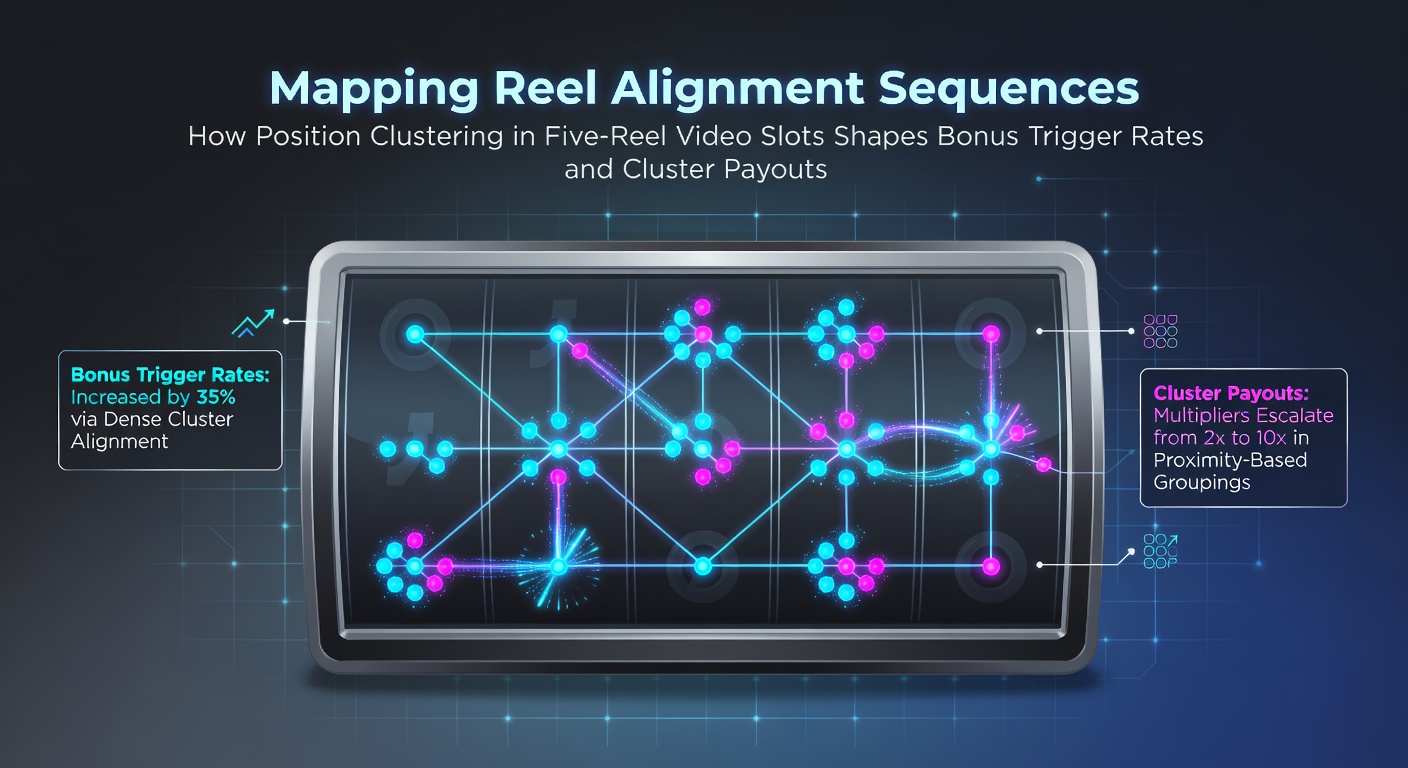
Mapping Reel Alignment Sequences: How Position Clustering in Five-Reel Video Slots Shapes Bonus Trigger Rates and Cluster Payouts
Position clustering in five-reel video slots refers to the grouping of symbols across adjacent reels that determines whether bonus features activate or payouts multiply, and studies of these patterns reveal consistent relationships between reel stops and trigger frequencies. Manufacturers design virtual reel strips with weighted symbol distributions so certain alignments occur more often than random chance alone would predict, while position maps help analysts track how clusters form during spins.
Understanding Reel Alignment Sequences
Reel alignment sequences emerge when symbols land in specific vertical and horizontal positions across the five reels, and software logs these stops to calculate hit rates for every possible outcome. Each reel carries a finite number of symbol positions that cycle through a random number generator, yet the physical mapping of high-value symbols on adjacent reels creates measurable clusters. Observers note that sequences involving three or more matching symbols in a row trigger base game payouts while longer or specially positioned clusters often unlock bonus rounds.
Data from slot certification labs shows that alignment frequency depends on the exact placement of scatter symbols and wilds, and programmers adjust these placements to maintain target return-to-player percentages. When clusters form near the center reels, they intersect with more paylines or ways-to-win configurations, increasing the statistical likelihood that a bonus event will register on that spin.
Mechanics of Position Clustering
Position clustering operates through predefined zones on the five-by-three or five-by-four symbol grid, and analysts map every cell to determine adjacency rules that qualify symbols for bonus evaluation. In many five-reel titles, clusters must occupy consecutive reels starting from the leftmost column, yet some games permit right-to-left or both-ways evaluations that expand the qualifying positions. Researchers have documented how symbol weighting concentrates high-paying icons in the middle three reels because those positions participate in the greatest number of active lines or ways.
Turns out the clustering algorithm also accounts for stacked symbols that occupy multiple positions on a single reel, and this stacking multiplies the chance that a full cluster will land during a single spin cycle. Software records the exact reel stops for every play, allowing operators to review historical data and confirm that certain position combinations appear at rates predicted by the underlying mathematics.
Influence on Bonus Trigger Rates
Bonus trigger rates rise when scatter symbols occupy clustered positions across three or more reels, and operators calibrate these rates to balance player engagement with regulatory requirements for game fairness. Studies of certified titles indicate that moving a single scatter position from the first reel to the third reel can shift the trigger frequency by several percentage points because the middle reels participate in more evaluation windows. Figures from independent testing agencies reveal that games with tighter clustering requirements tend to deliver bonus events at intervals ranging from 80 to 150 spins on average, depending on the density of qualifying symbols.
As of May 2026, updated technical standards in multiple jurisdictions require clearer disclosure of these probabilities so players receive accurate information about expected feature frequency. Position maps generated during the certification process help regulators verify that published trigger rates match actual reel outcomes across large sample sizes.
Effects on Cluster Payouts
Cluster payouts scale according to the size and location of symbol groups that form during a spin, and larger clusters spanning four or five reels produce multipliers or fixed awards that exceed standard line pays. When wild symbols fill gaps within a cluster, the game engine evaluates every possible combination that meets the adjacency rules, often resulting in several simultaneous payouts from one spin. Evidence from performance reports compiled by gaming laboratories shows that titles emphasizing cluster mechanics allocate higher portions of the return-to-player percentage to these events compared with traditional payline structures.
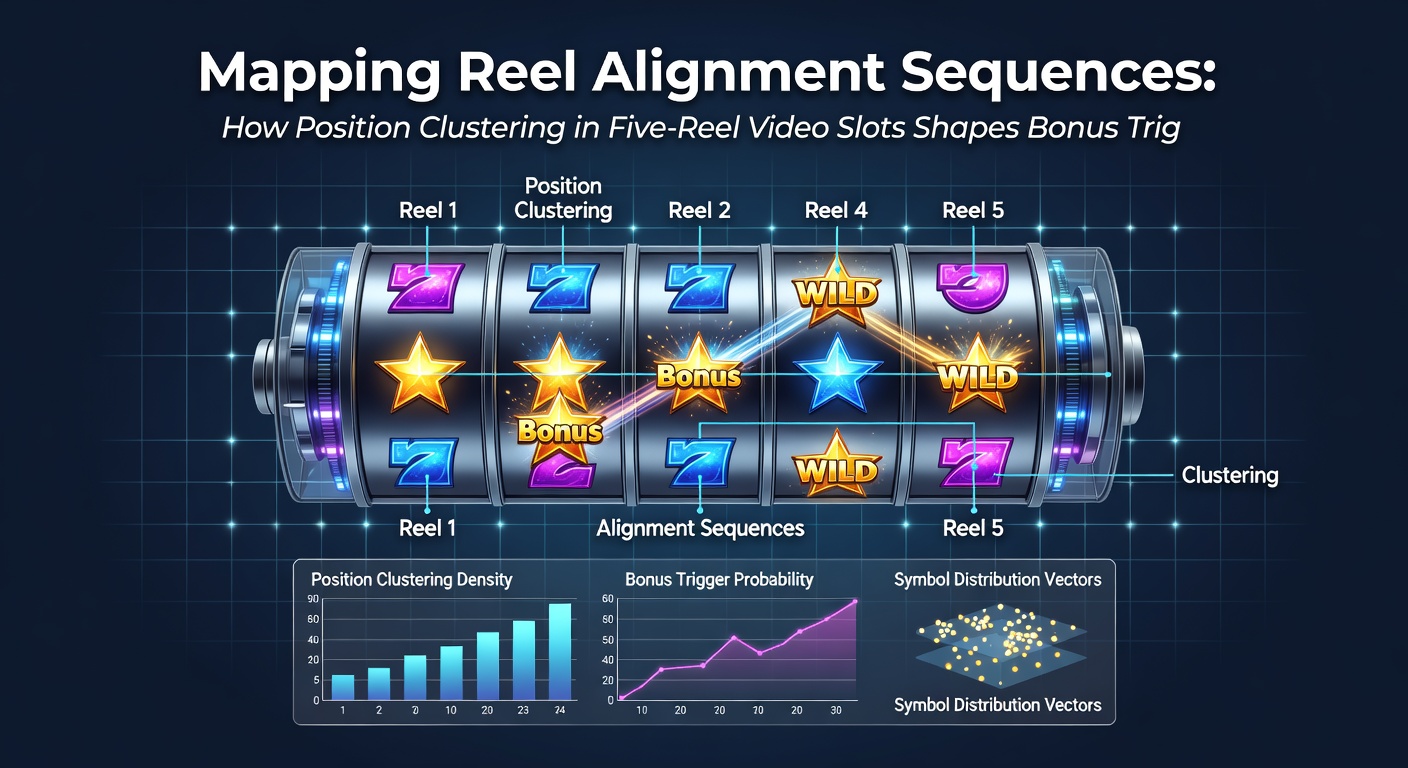
Manufacturers therefore adjust symbol distribution curves so that medium-sized clusters appear frequently enough to sustain interest while reserving the largest clusters for rarer, higher-value outcomes. Analysts who examine thousands of spins find that payout variance increases when clusters can expand through cascading or tumbling sequences after an initial alignment registers.
Analytical Mapping Techniques
Mapping techniques involve plotting every possible reel stop combination onto a coordinate grid and calculating the probability that any given cell participates in a qualifying cluster. These maps allow game designers to visualize overlaps between bonus-trigger positions and high-value payout positions, then fine-tune reel strips accordingly. Software tools used by testing facilities generate heat maps that highlight which grid cells contribute most frequently to bonus activations and cluster awards.
One study released by the University of Nevada, Reno examined cluster dynamics across fifty certified five-reel titles and confirmed that central grid positions consistently show elevated participation rates in both bonus triggers and large payouts. American Gaming Association reports further document how operators use these maps to maintain compliance with technical standards while preserving intended game mathematics.
Regulatory and Industry Context
Regulatory bodies in Australia and several European jurisdictions require operators to retain detailed logs of reel positions for every spin so that random outcomes can be audited against published probabilities. These requirements have driven adoption of standardized mapping formats that facilitate cross-jurisdiction comparisons of cluster behavior. Industry organizations such as the International Association of Gaming Regulators have issued guidance encouraging transparent presentation of how position clustering affects feature frequency.
Because five-reel video slots remain among the most widely deployed cabinet types, continued refinement of alignment mapping supports both regulatory oversight and player information initiatives. Data aggregated across multiple markets indicates that titles with well-documented cluster mechanics experience stable performance metrics over extended operational periods.
Conclusion
Position clustering in five-reel video slots directly influences the frequency of bonus triggers and the magnitude of cluster payouts through precise reel alignment sequences. Mapping these sequences provides operators, regulators, and analysts with verifiable data that confirms game outcomes align with certified mathematics. Continued examination of these patterns supports fair play standards while delivering the feature dynamics players encounter during regular sessions.