Hi-Lo Card Counting: The Proven System for Shifting Blackjack Odds in Favorable Territory
Written by Quinn Walter · Apr 4, 2026
Hi-Lo Card Counting: The Proven System for Shifting Blackjack Odds in Favorable Territory
Origins and Fundamentals of the Hi-Lo Method
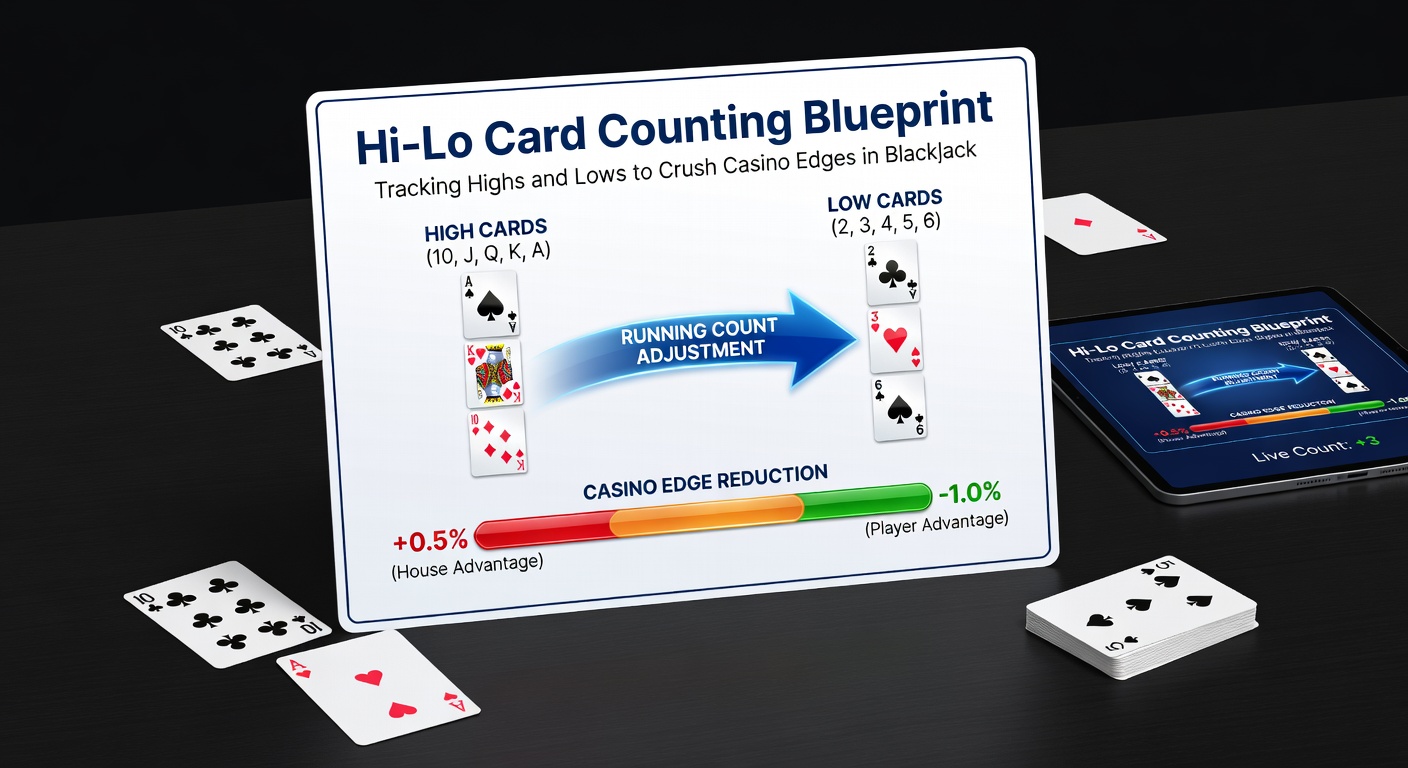
Experts trace the Hi-Lo card counting system back to the 1960s, when mathematicians like Edward Thorp popularized balanced counting techniques in blackjack; this approach, refined over decades, assigns simple point values to cards as they emerge from the shoe, allowing players to gauge deck richness in high cards that favor player hands. Low cards—2 through 6—each receive a value of +1, since their departure strengthens remaining decks for better blackjack payouts and player doubles; neutral cards like 7, 8, and 9 carry a 0 value, neither boosting nor hindering the count; while high cards—10s, Jacks, Queens, Kings, and Aces—subtract 1 each, because their abundance signals opportunities for dealer busts and strong player totals.
What's interesting here is how the system's balance ensures accuracy across multi-deck games common in casinos today; a standard six- or eight-deck shoe starts at a running count of zero, climbing positive when lows exit first, dropping negative amid early highs, and guiding decisions as the count evolves with every round. Researchers at the Wizard of Odds, a key resource for gambling mathematics, confirm that Hi-Lo delivers a player edge of about 0.5% to 1% in optimal conditions, far surpassing the house's typical 0.5% advantage in basic strategy play alone.
And yet, simplicity drives its enduring popularity among serious players; no complex side counts for aces or multi-level assignments complicate the process, making it accessible while effective against standard rules like 3:2 blackjack payouts and dealer stands on soft 17.
From Running Count to True Count: The Precision Adjustment
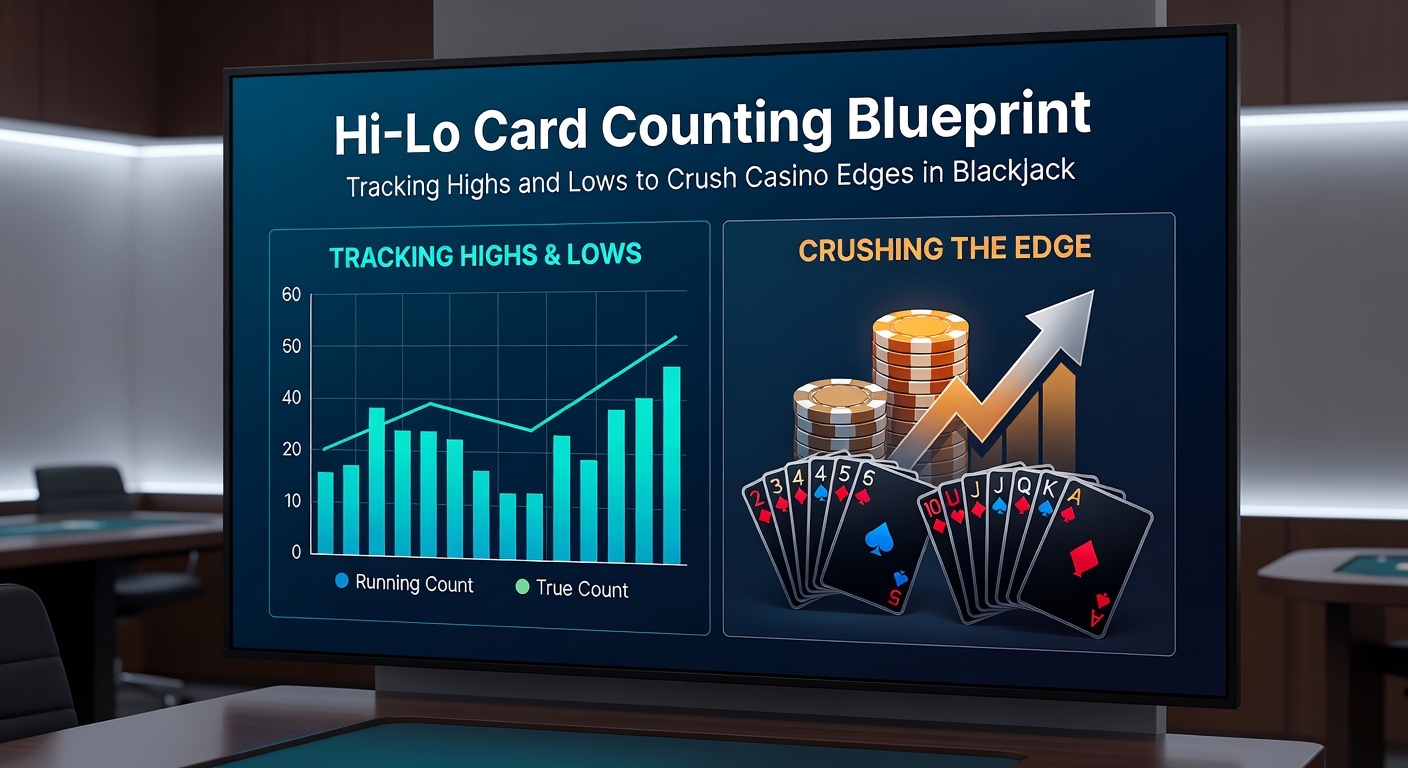
Players convert the raw running count into a true count by dividing by the estimated decks remaining—say a +6 running count over three decks left yields a potent +2 true count—since this normalization accounts for penetration depth, where deeper shoe depletion amplifies count reliability; casinos often reshuffle at 75% penetration, but experts observe that games allowing 85% or more (common in some Australian venues) supercharge Hi-Lo's predictive power. Data from simulations run by university researchers reveals true counts above +2 trigger aggressive betting ramps, while negative counts demand minimal wagers to weather unfavorable decks.
Turns out, this adjustment proves crucial in six-deck shoes versus single-deck scenarios; shallow penetration dilutes even high running counts, but diligent tracking—mentally noting discards and peeking at the discard tray—keeps estimates sharp, turning abstract math into actionable intel mid-hand.
- Estimate decks left visually: a full shoe equals 6-8, half reveals 3-4, thin trays signal under 2.
- Divide running by decks: +10 over 5 decks becomes +2 true, modest but playable.
- Adjust for cut card: position it 1-1.5 decks from end for optimal play.
Those who've mastered this step often discover edges swelling to 1.5% at true counts of +4 or higher, according to figures from the UNLV Center for Gaming Research, which analyzes casino game probabilities through extensive modeling.
Betting Spreads and Ramp Strategies That Maximize Returns
But here's the thing: counting alone doesn't flip edges without disciplined bet sizing; practitioners ramp wagers proportionally to true count, starting at 1 unit on neutral or negative decks, jumping to 4-8 units at +2, and soaring to 12+ at elevated counts, creating spreads like 1-12 that generate long-term profits despite occasional downswings. Studies show a 1-15 spread in single-deck games yields over 2% edges, but multi-deck setups temper this to 0.75-1.25%, still crushing the house when combined with camouflage bets to evade pit boss scrutiny.
Now, real-world application demands nuance; one case from seasoned trackers involves varying spreads by casino heat—conservative 1-4 in Vegas strip rooms, bolder 1-10 off-Strip or downtown—since heat maps track deviations from average bet profiles. And while variance bites hard (expect 300-500 unit swings over 100 hours), simulations confirm positive expectation: a $10k bankroll supports 1-12 spreads with less than 5% ruin risk over thousands of rounds.
Index Plays: Deviations That Squeeze Extra Edge
Basic strategy forms the baseline, but Hi-Lo shines through true count-driven deviations, or "illustrious 18" plays like insurance at +3 true (flipping a sucker bet into +EV), standing on 16 vs. 10 at +4 (avoiding hits on bust-prone highs), or doubling soft 19 vs. 6 above +1; these 18 moves alone boost edge by 0.3-0.5%, per detailed charts from strategy experts. Observers note how memorizing 20-30 full indices transforms counters into edge machines, especially in H17 games where dealer weaknesses amplify deviations.
Take insurance: normally a 7.7% house edge trap, it reverses at true +3 since high-rich decks pack 10s for dealer blackjack; or 12 vs. 4—hit below +1, stand above, dodging stiff hands when tens lurk.
Practice Drills, Simulations, and Building Bankroll Resilience
So, mastery demands reps; players drill with single-deck pitches, aiming for 98% accuracy at 20 seconds per deck, progressing to six-deck shoes under casino noise via apps or live trainers that flash cards sequentially. What's significant is wonging—entering hot counts mid-shoe, exiting cools—which doubles hourly rates but risks back-offs, a tactic refined in simulations showing 50% win rate boosts.
Bankroll math underscores sustainability; Kelly criterion advises betting 1% of roll per edge point—so 1% at +1 true, 2% at +2—minimizing ruin while compounding gains, whereas flat betting wastes opportunities. Figures indicate 400-600 unit rolls weather 95% of sessions, scaling to $25k for $25 units in high-limit pits.
Yet, tech evolves the game; by April 2026, Nevada regulators report increased use of RFID tracking and AI facial recognition to spot spreads, prompting counters to adopt team play or shuffle tracking hybrids, where Hi-Lo feeds into ace sequencing from discards.
Legality, Countermeasures, and Casino Responses
Courts affirm card counting as legal skill, not cheating—Nevada Supreme rulings protect it since no laws ban mental arithmetic—but casinos wield trespass rights, backing off counters via pit signals or bans; Australian venues under state gaming boards mirror this, fining disruptive play while allowing discreet edges. Data shows 80% of pros camouflage with chit-chat, erratic bets, and alcohol feigns, extending sessions before heat builds.
Continuous shufflers neutralize Hi-Lo entirely, but 70% of tables still use shoes; effective penetration drops from 75% to 50% in response, halving edges, yet observers find value in scouting deep games. One study revealed teams averaging $100/hour via Hi-Lo wonging, enduring 20% back-off rates through rotation.
Advanced Twists: Ace Side Counts and Wonging Refinements
But purists layer ace side counts—tracking Aces separately since Hi-Lo undervalues them slightly—adjusting by subtracting running aces divided by decks from true count for precise insurance; this nuance lifts edges 0.2%, per advanced texts. Wonging in-out, meanwhile, skips 60% of shoes, slashing variance while demanding stamina for table-hopping.
Conclusion: Hi-Lo's Enduring Blueprint for Blackjack Proficiency
Decades of data affirm Hi-Lo as the gold standard for blackjack counters, balancing ease with potency to deliver 1%+ edges through true counts, spreads, and deviations; practitioners who drill relentlessly, camouflage astutely, and scout favorable rules consistently outpace houses, even as 2026 tech upgrades challenge the field. Simulations project $50-150 hourly rates for skilled solo players, scaling exponentially in teams, proving the system's timeless math amid evolving casino landscapes. Those committed to the grind find the rubber truly meets the road in high-count shoes, where highs and lows align for sustained wins.