Deck Composition Shifts Following Card Removals in Multi-Hand Blackjack Sessions
Written by Cameron Peters · Jul 14, 2026
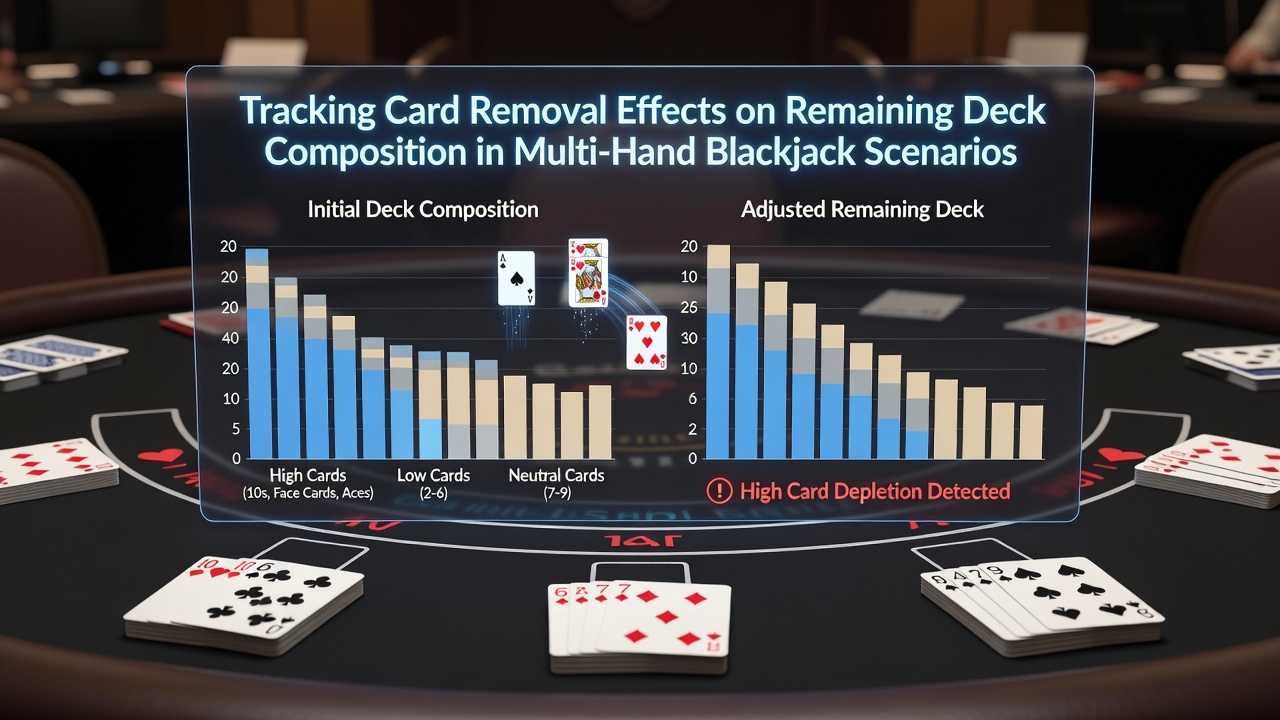
Deck Composition Shifts Following Card Removals in Multi-Hand Blackjack Sessions
Card removal in blackjack alters the probabilities that govern subsequent hands, and this effect compounds when players occupy multiple spots at the same table. Observers note that each card dealt changes the remaining composition, yet the impact registers differently once several hands progress simultaneously because cards exit the shoe in clusters rather than one at a time.
Core Mechanics of Removal Tracking
Researchers at institutions focused on gaming mathematics have documented that removing high-value cards lowers the player's edge while removal of low-value cards raises it, and these adjustments occur continuously across rounds. In single-hand play the calculation stays straightforward, but multi-hand scenarios introduce overlapping information because the same removed cards influence every position still in contention.
Data from controlled simulations reveal that the first hand in a multi-hand round experiences removal effects only from prior rounds, whereas later hands within the same round incorporate cards already dealt to the initial positions. This sequential dependency means players who track composition must update running counts after each individual hand rather than waiting for the round to finish.
Effects Across Successive Hands
Studies conducted by the University of Nevada, Las Vegas gaming laboratory indicate that the correlation between removed cards and remaining deck value strengthens as more hands complete. When three or four spots receive cards, low-card depletion in early hands can elevate the probability of blackjack payouts in later hands of the same round, provided the dealer upcard remains neutral.
What's interesting is how the magnitude of these shifts varies by penetration level. At shallower depths the effect stays modest because the shoe still contains many unseen cards, yet deeper into the shoe the same removals produce larger deviations in expected value for the remaining hands.
Practical Tracking Adjustments
Industry reports compiled by the American Gaming Association show that professional counters often apply a per-hand adjustment factor when multiple positions are active. This factor accounts for the fact that cards removed from one hand are unavailable to every other hand still unresolved, creating a temporary imbalance that standard single-hand models overlook.
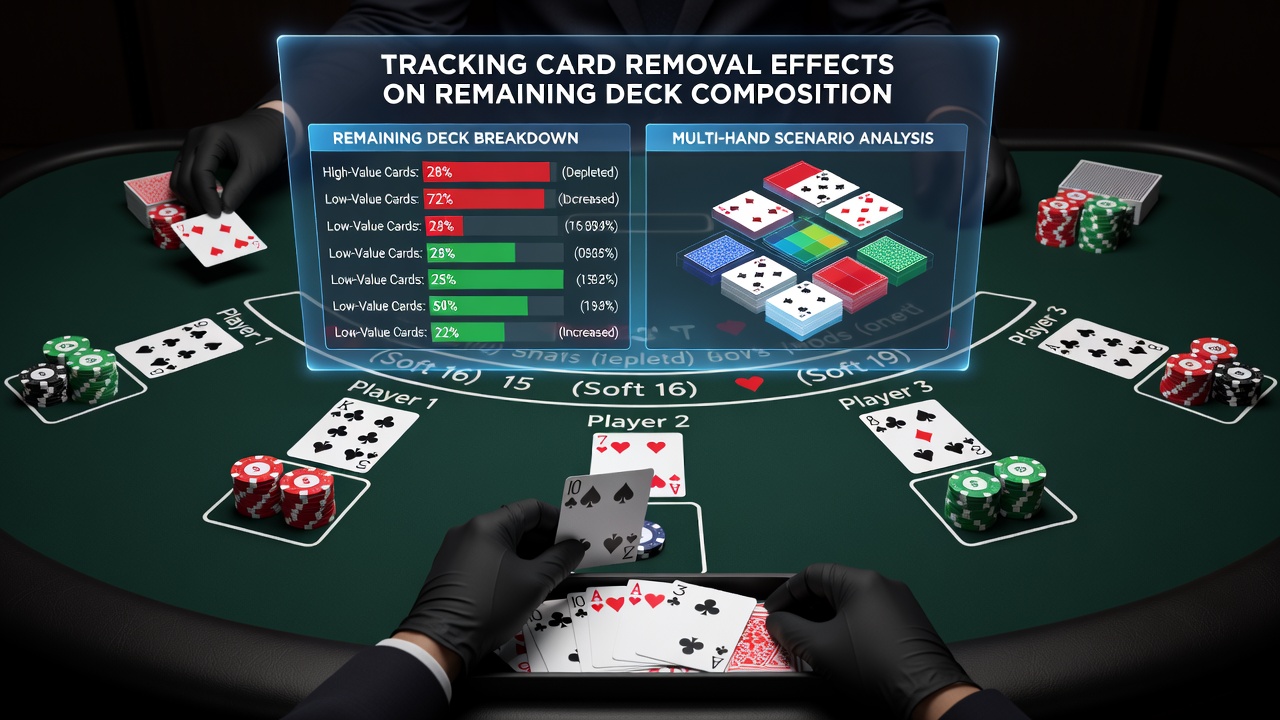
Those who monitor these patterns adjust true-count calculations after each hand rather than at round end, which captures the incremental changes more accurately. Evidence suggests this approach reduces variance in edge estimates when tables operate at six or seven players.
Regional Data and Regulatory Context
Figures released by the Nevada Gaming Control Board for the period ending July 2026 illustrate steady growth in multi-hand table utilization, particularly during peak hours when composition tracking becomes more relevant. Similar patterns appear in reports from the Australian Gambling Research Centre, where analysts noted comparable shifts in remaining deck value when players occupy adjacent positions.
One study revealed that the average edge swing per additional hand dealt reaches 0.3 to 0.7 percent depending on the count and penetration, confirming that removal effects accumulate measurably across the round.
Conclusion
Tracking card removal effects on remaining deck composition in multi-hand blackjack requires updating counts after every hand rather than at round completion. Data from multiple research sources confirm that these incremental adjustments produce more precise assessments of player advantage as the shoe progresses, especially when several positions remain active. The patterns hold across different jurisdictions and continue to inform strategy development in both land-based and regulated online environments.